
Vsevolod Nedora
Quantitative Developer
FlexPower, Hamburg
About Me
Hi, I’m Vsevolod Nedora. I work as a Quantitative Developer at FlexPower, where I build algorithms for energy trading and research. Most of my day-to-day work sits at the intersection of high-performance computing (C++) and data analysis (Python), with a current focus on forecasting electricity prices and making sense of the ever-changing energy landscape.
Before joining industry, I spent several years in astrophysics research at the Max Planck Institute for Gravitational Physics, studying neutron star mergers and gamma-ray bursts. Along the way, I developed open-source tools like PyBlastAfterglow for simulating afterglows, and bns-ppr-tools for relativistic hydrodynamics. Those projects taught me as much about software engineering as they did about physics.
These days my side projects often connect back to energy. For example, I maintain an MLOps pipeline for short-term electricity price forecasting, and I’ve been experimenting with NLP tools to summarize energy news. Both are ways for me to explore how data and automation can help navigate complex systems.
Outside of work, I enjoy travelling, photography, and writing science fiction. Teaching and mentoring have also been rewarding parts of my journey, and I’m always happy to share knowledge or collaborate on interesting ideas.
If any of this resonates, feel free to reach out—I’m always glad to connect.
Education
-
PhD in Theoretical Astrophsyics, 2021
Friedrich-Schiller-Universität Jena, Germany
-
Master's in Astrophysics, 2018
Universität Bonn, Germany
-
Bachelor's in Physics, 2015
Far Eastern Federal University, Vladivostok, Russia
Personal Projects

Energy Heartbeat
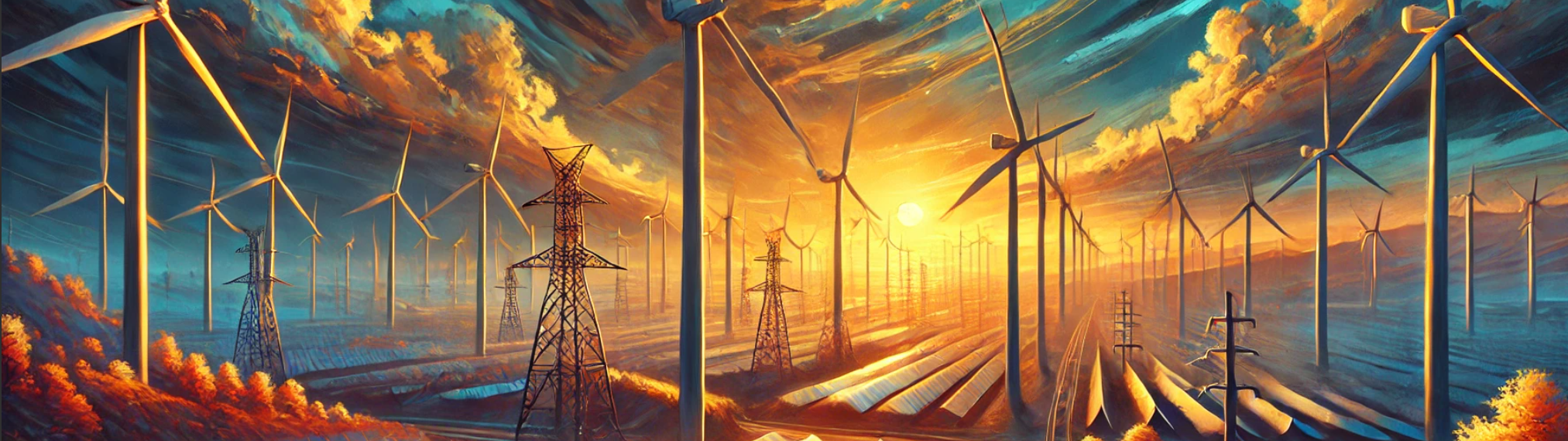
An automated, temporally-aware knowledge graph that transforms scattered European energy news into structured, queryable insights using NLP/LLMs. A daily pipeline scrapes and cleans 13+ sources (TSOs, regulators, markets, analysis), semantically chunks articles, and extracts time-stamped entities/relations to answer “as-of” and “what-changed” questions—starting with Germany.
- Stage 1: Scraping News Posts and Building Semantic Chunker (24/08/2025)
MLOps Electricity Price Forecasting Project
Leverages MLOps pipelines for accurate week-ahead forecasts of renewable energy generation, electricity load, and prices. Combines robust data engineering, advanced ML models, and scalable automation to optimize operations, enhance trading strategies, and support sustainable energy integration.
- Stage 1: Data Collection via APIs and scraping (11/10/2024)
- Stage 2: Baseline Forecasting via an Ensemble Model (21/11/2024)
- Stage 3: Finetuning, Training, Forecasting Pipeline (15/12/2024)
- Stage 4: MVP Release: nn- and off-shore wind power forecasts; deployment to GitHub Pages (03/01/2025)
Academic Software
PyBlastAfterglow: Electromagnetic Signature Modeling for Gamma-ray Bursts
PyBlastAfterglow is a C++ code with a Python interface designed to model light curves, spectra, and sky maps of gamma-ray bursts and kilonova afterglows. It numerically solves the hydrodynamics of shock fronts and the evolution of electron distributions, and computes synchrotron and SSC emission. The modular structure of the code makes it easy to incorporate new physical models or techniques.
Academic Career
List of First-Author Publications
- Multi-physics framework for fast modeling of gamma-ray burst afterglows – September 2024
- Synthetic radio images of structured GRB and kilonova afterglows – February 2023
- Modeling kilonova afterglows: Effects of the thermal electron population and interaction with GRB outflows – January 2023
- Dynamical ejecta synchrotron emission as possible contributor to the changing behaviour of GRB170817A – April 2021
- Mapping dynamical ejecta and disk masses from numerical relativity simulations of neutron star mergers – November 2021
- Numerical Relativity Simulations of the Neutron Star Merger GW170817: Long-Term Remnant Evolutions, Winds, Remnant Disks, and Nucleosynthesis – August 2020
- Spiral-wave wind for the blue kilonova – July 2019
Conferences, Talks and Outreach
- Invited speaker at Deutsches Elektronen-Synchrotron (DESY) – Zeuthen, Germany, 2023
- Invited speaker at Weizmann Institute of Science – Tel-Aviv, Israel, 2023
-
ECT* conference – Rome, Italy, September 2022
Modeling of electromagnetic counterparts of binary neutron star mergers -
RTG conference – Online (Jena), Germany, September 2021
Binary neutron star mergers: ejecta, nucleosynthesis and electromagnetic counterparts -
ISAPP PhD School Summer School on Gravitational Waves – Online, June 2021
BNS mergers: EM counterparts & nucleosynthesis (poster) -
MICRA Workshop at TPI – Jena, Germany, August 2019
Spiral-wave wind for the blue kilonova -
ECT* conference plenary talk at University of Trento – Trento, Italy, June 2019
Neutron Star Mergers & Electromagnetic Counterparts -
RTG conference – Munich, Germany, March 2019
Numerical Relativity Informed Kilonova Model -
Tutor at Bonn University – 2017-2018
Courses: Stars and Stellar Evolution, Nucleosynthesis -
Lecturer and Tutor at FSU Jena – 2019-2021
Courses: Computational Physics II, Project Practicum: Numerical solutions to wave equation - Member of German Physical Society – 2019-2024
- Member of Computational Relativity Group – 2019-2024
- Service: Computational Relativity Group (CoRe) – 2019-2023
Thesis Works
-
PhD Thesis: Binary Neutron Star Mergers and Electromagnetic Counterparts – Defence: 14 April 2022
Friedrich-Schiller-Universität Jena -
Master's Thesis: Diagnostic of the Conditions at the Base of the Optically Thick Winds of Wolf-Rayet Stars in the Galaxy and the LMC – Defence: September 2018
Rheinischen Friedrich-Wilhelms-Universität Bonn
Photography
Distilled Emotion
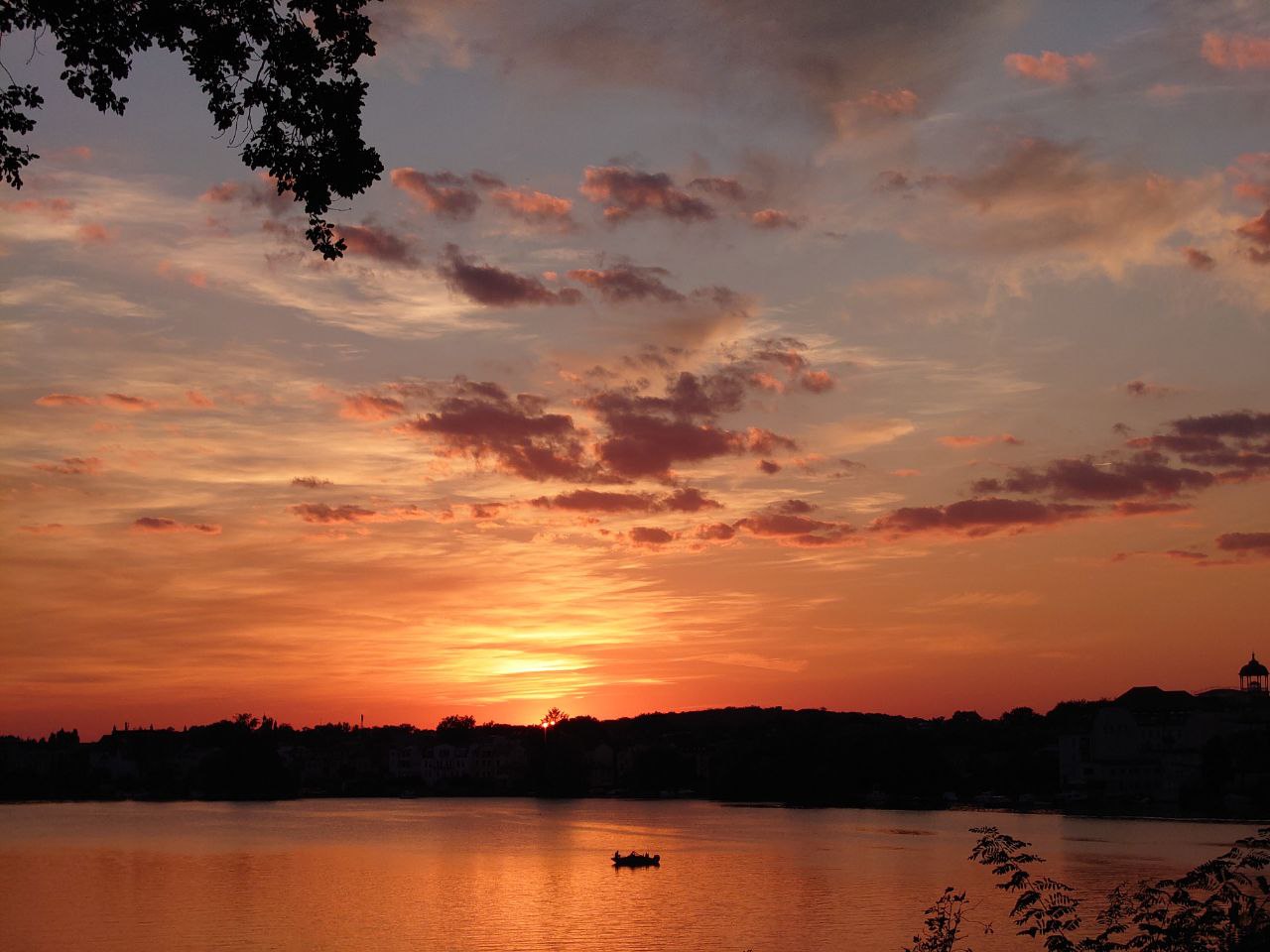
Through my work, I aim to distill the calming power of nature and capture it with a camera. Whether it's sunsets, cloudscapes, or close-up details of nature, I want my photos to evoke a sense of serenity and thoughtfulness.
Writing
Science Fiction
I think a lot about the future of humankind and how technology, culture, psychology, and science may evolve. I try to explore these ideas through stories that readers can enjoy. Most of my writing has been done in Russian and can be found on Samizdat. However, more recently, I’ve started writing in English, with some works available on Wattpad.

The Orchestrated Rain
- Marcus wakes up to find his family gone, leaving only a short note and a trail to the City. He sets off, determined to bring back his son and his future. Meanwhile, Elena arrives in the City, searching for a promise that feels out of reach, only to face an unexpected storm that changes everything.